How Anaerobic
Digestion Works
A natural process that turns organic waste into renewable gas and fertiliser.
Anaerobic Digestion
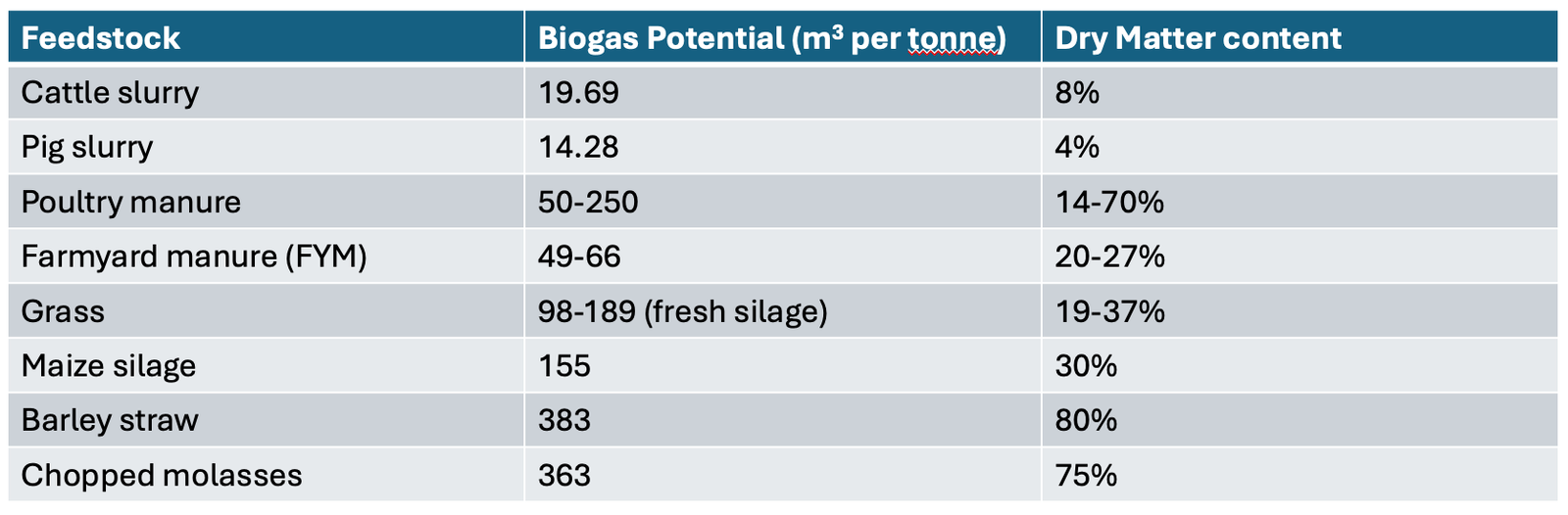
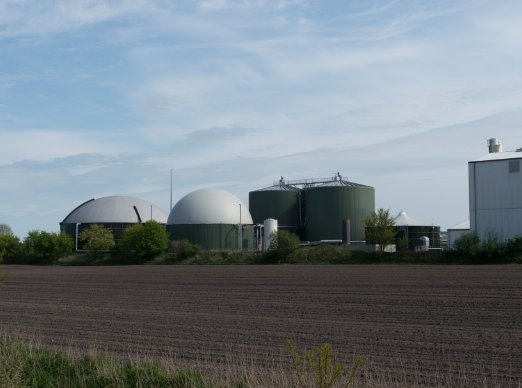
Anaerobic digestion (AD) is a natural process where microbes break down organic material in a sealed, oxygen-free tank. As this happens, the material produces biogas, which is later refined into biomethane, and a solid/liquid residue known as digestate.
This process is already widely used across Europe and it’s proven, clean, and safe.
The 3 Main Steps
A simple, closed-loop system that mimics nature.
Feeding
Organic materials such as slurry,
grass silage, and food waste are
collected and placed into an
airtight tank called a digester.
Breakdown
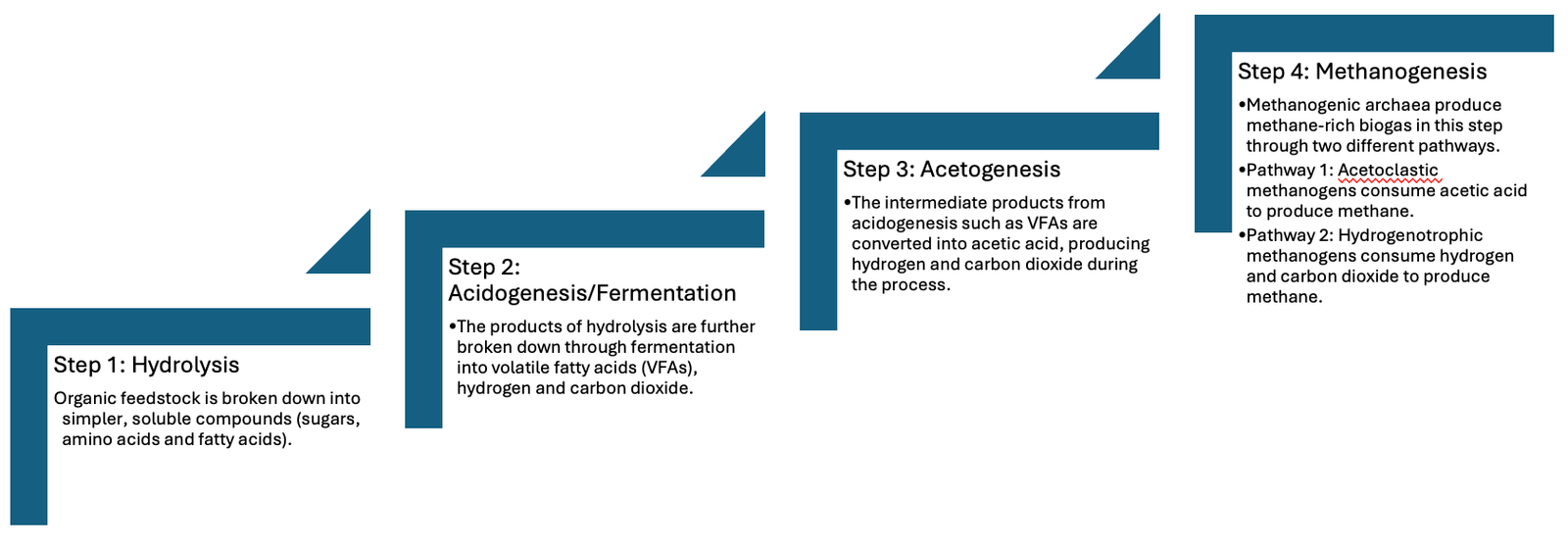
Inside the digester, bacteria
break down the materials
without oxygen. This creates
biogas, a mix of methane and
CO₂ and digestate.
Upgrading
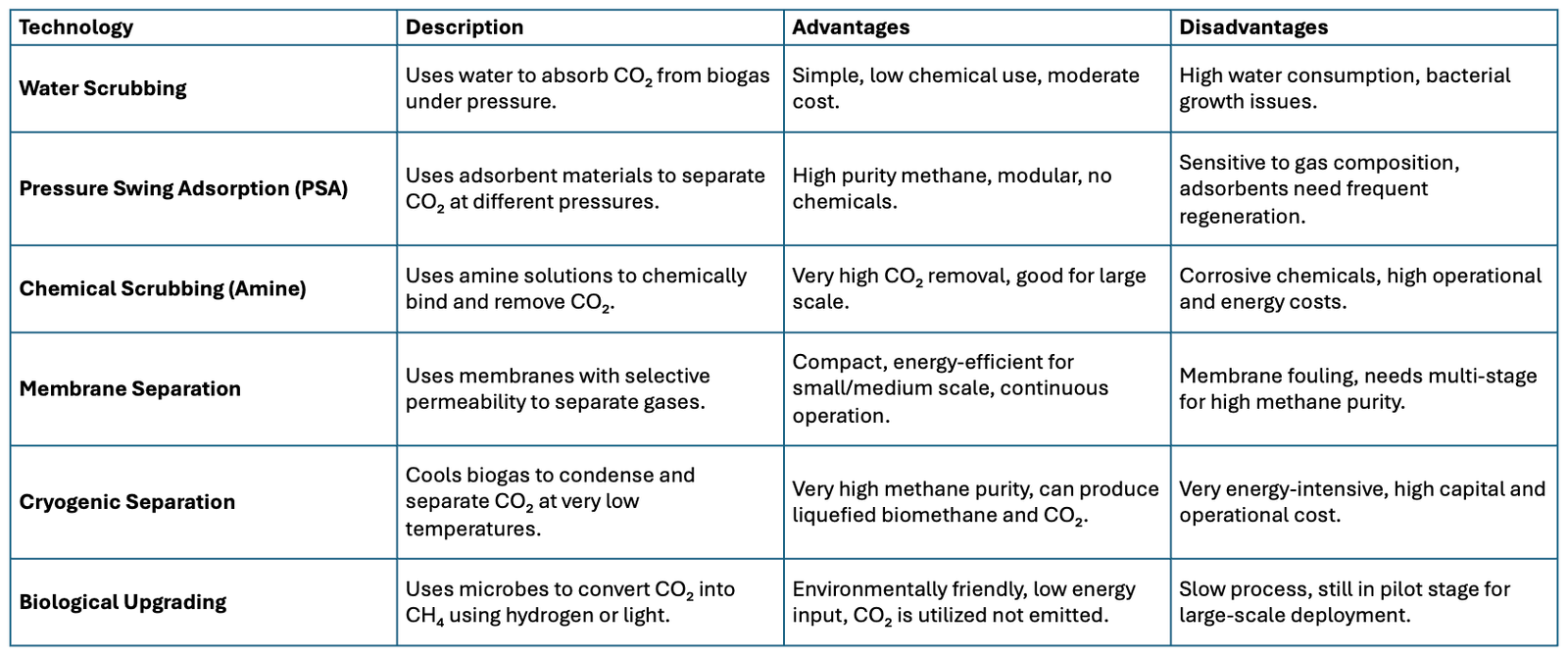
The biogas is cleaned and
upgraded to high-purity
biomethane, which can then be
injected into the gas grid or used
directly as a fuel.
Interested in the benefits of digestate?
A clean by-product with real value for Irish farms.